The condition of allergic rhinitis is estimated to affect over 400 million people worldwide and is frequently misdiagnosed or left untreated. In the U.S. alone, it impacts around 10% to 30% of adults and nearly 40% of children, making it the fifth most prevalent chronic condition.
Allergic Rhinitis causes concern globally as it is frequently encountered in the clinic as one of the upper respiratory tract disorders. It is a global ailment and is not limited to a certain age or gender.
Within the Indian subcontinent, nearly 20-30% of the population is reported to suffer from one or the other allergic condition, with allergic rhinitis affecting 20-30% of the Indian population.
What is Allergic Rhinitis
Allergic rhinitis (ICD 10 code J30), commonly known as hay fever, is a form of respiratory disorder. It is an allergic disease that occurs as an overreaction of the immune system to certain stimuli or allergens prevalent in the environment. It is triggered by allergens such as tree pollen, grass pollen, weed pollen, dust mites, mold spores, and animal dander.
Allergic rhinitis is classified into two categories:
- Seasonal allergic rhinitis, which occurs during certain seasons, and
- Perennial allergic rhinitis, which is triggered by indoor allergens and can occur at any time of the year.
Conventional allergic rhinitis medicine in allopathy does not offer a guarantee treatment for Allergic Rhinitis, but Ayurvedic medicine does offer a treatment plan that shows promise in alleviating its symptoms. Modern treatments like antihistamines or an allergic rhinitis nose spray provide short-term relief only.
Allergic Rhinitis does get some attention from modern medicine, one could argue that it only offers a very temporary and limited form of assistance.
Ayurveda places great emphasis on the idea of employing indigenous methods in addressing various issues in one’s health. Because of this principle, allergic rhinitis ayurvedic treatment has no side effects, and it could also be an option for managing allergic rhinitis.
Allergic Rhinitis Symptoms
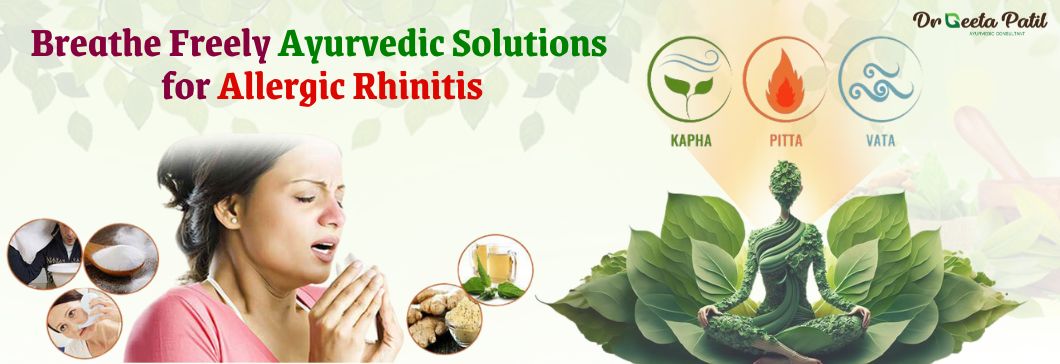
Ayurvedic medicine considers allergic rhinitis from a different perspective than conventional medicine. Ayurveda describes and classifies allergic rhinitis with sneezing, nasal blockage, headaches, shortness of breath, throat and nasal itching, and discharge from the nose, making a total of six symptoms. These allergic rhinitis signs are thought to arise from the toxin “Ama,” which damages the body’s digestive and thermoregulatory systems, and “Ama” in turn weakens the digestive and immune systems. The allergic rhinitis pathology is primarily linked to the Kapha dosha, which manifests as an overreaction in the lower circuits of the central nervous system, in turn overactive hypersensitivity.
Understanding Allergic Rhinitis and Ayurvedic Treatments
Allergic rhinitis management has been assumed to be an easy disorder to manage, and curing it in a shorter time period is often regarded as a challenge. There is an Ayurvedic condition known as Vataja Pratishyaya, which has symptoms corresponding to allergic rhinitis. The effective allergic rhinitis treatment in Ayurveda is based on the Ayurveda holistic approach.
Panchakarma therapy has been successfully used for treating Vataja Pratishyaya, especially the Nasya treatment, which has effective results in allergic rhinitis.